
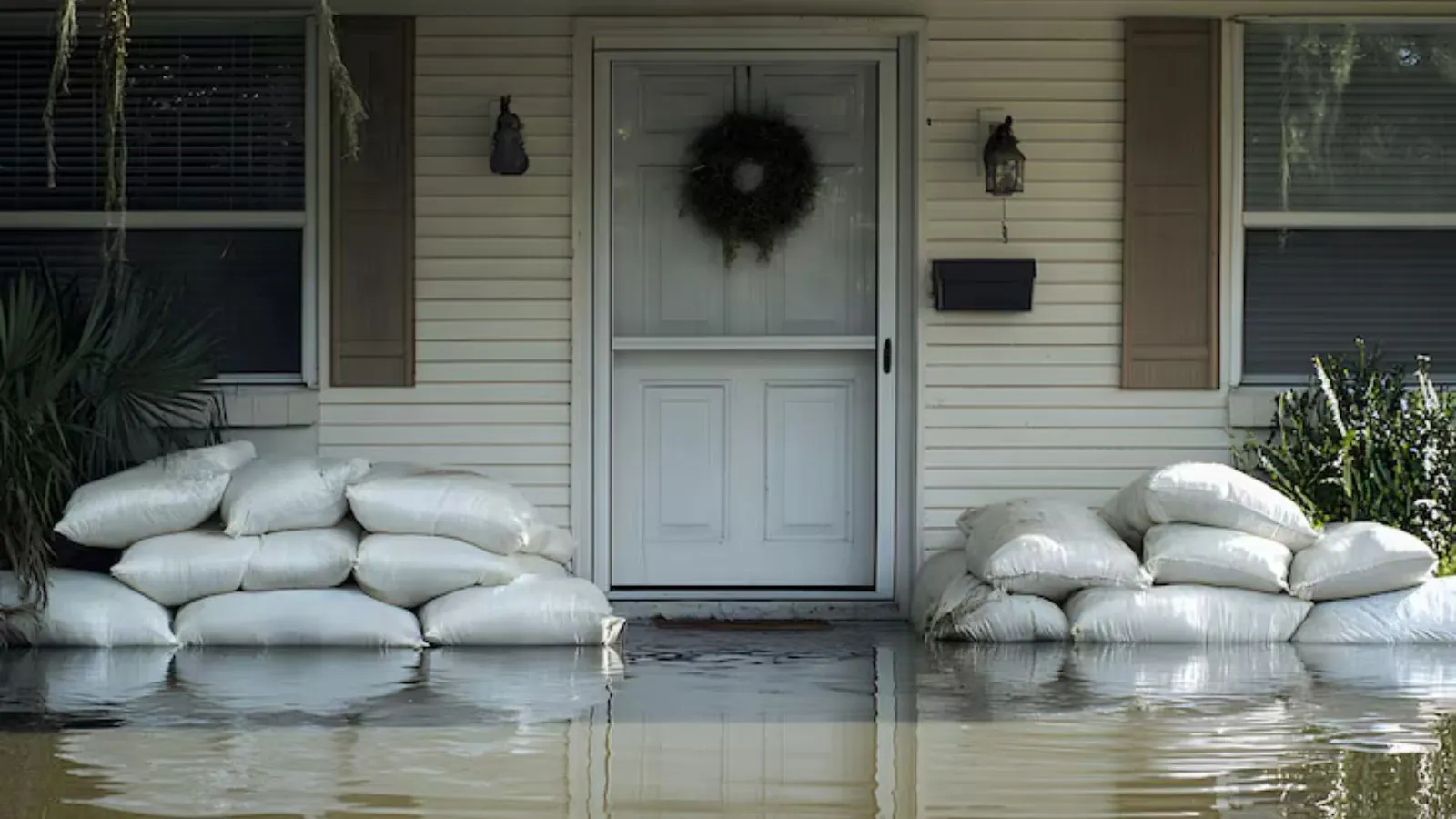
Preparation is about water paths
Storm preparation sounds like a big project. In practice it is a few hours of work spread across a weekend, aimed at one idea: give water an easy way to leave, and move what you care about out of its path.
This guide is about getting ready. It is not about cleanup methods, which belong to the service pages. It starts outside and works in.
Outside: roof, gutters and grading
Exterior checklist
- Clean gutters and downspouts, and check that they are firmly fixed
- Extend downspouts so they discharge several feet from the foundation
- Look at the roof from the ground for missing or lifted shingles and have a roofer check anything doubtful
- Check flashing around chimneys, skylights and vents
- Make sure soil slopes away from the house on every side
- Clear leaves from window wells, area drains and the street drain near your driveway
- Trim limbs that overhang the roof
- Bring in or tie down anything the wind could throw
Gutters are the item most often skipped and most often blamed. A blocked gutter sends roof water down the wall and to the foot of the foundation, which is the worst place for it.
The basement
Basement checklist
- Test the sump pump by pouring a bucket of water into the pit
- Consider a battery backup, since pumps fail in power cuts
- Check that the discharge line is clear and points away from the house
- Move stored items onto shelves or into plastic bins, off the floor
- Raise or relocate anything valuable or irreplaceable
- Note the location of the electrical panel and whether it could be reached dry
- Check that floor drains are clear
If you have a finished basement, think about what sits at floor level: carpet, the bottom of the drywall, furniture legs, electronics. You cannot raise the walls, but you can raise the contents.
Inside the house
Know where the main water shutoff is and make sure it turns. Know where the electrical panel is. Keep a torch where you can find it in the dark. Photograph each room now, while it is dry, and store the photos online. That set of pictures is the simplest inventory you will ever make, and it is useful for any insurance claim.
Paperwork before the weather
Read the water sections of your homeowners policy on a calm day. Standard policies usually exclude flood, and sewer or drain backup often needs an added endorsement. Flood policies commonly have a waiting period before they start, so ask an agent now, not when a storm has a name. Keep your policy number and the claims phone number somewhere you can reach without power.
The storm record for Nanuet
The public record tells you what to prepare for. A New York State DEC Resilient NY study of the Hackensack River watershed, which includes Nanuet, describes two kinds of flood-producing storm: short, high-intensity downpours and long events such as tropical storms and hurricanes.
It records three regional events. The remnants of Hurricane Floyd in 1999 dropped 3.16 inches of rain at Nanuet and pushed Pascack Brook past its 500-year flow. Irene in 2011 flooded part of Route 59 near Palisades Center Drive. Ida followed in 2021.
The study lists four high-risk flood areas in Nanuet on the Nauraushaun Brook system. Next door in West Nyack, the Journal News reported in January 2024 that flooding had closed Route 59 at the Palisades Center for the eighth time in a year. If your usual route uses that road, plan another.
The day before
- Charge phones and power banks.
- Move cars away from low spots and from under trees.
- Check the sump pump once more.
- Lift rugs and low furniture in rooms that have taken water before.
- Fill the bath or some containers if a power cut could affect your water.
- Check on neighbours who may need help.
During the storm
Stay inside and away from windows in high wind. Do not go into a basement that is taking water if outlets, appliances or the panel could be wet. Never drive through flooded roads. If water is rising in the house, move upstairs, and call 911 if anyone is in danger.
Afterward: the first look
When it is safe, walk the house top to bottom. Look at ceilings on the top floor for new stains. Check the attic from the hatch. Look at the base of basement walls. Photograph anything wet before you touch it. Then stop any active leak you can and call for help.
Rain that came through a damaged roof or window is covered on our storm water damage page. Standing water needs extraction first. We answer calls 24/7 from Nanuet and nearby West Nyack and Pearl River.
What preparation cannot do
No checklist makes a house storm-proof. A long enough storm will overwhelm a sump pump, and a strong enough gust will lift shingles. Preparation shrinks the loss and makes recovery quicker. It also means that when you call for help, you can say exactly what happened and show photos of how the room looked before.
Storm already came through? Call and describe where the water got in. The line is open 24/7.
Call (833) 521-1033Storm preparation questions
Which storms should Nanuet homeowners plan around?
The state's watershed study points to two kinds: sudden intense downpours, and long tropical events like Floyd in 1999, Irene in 2011 and Ida in 2021. Prepare for both by keeping gutters and drains clear for the first and the sump pump and basement contents ready for the second.
Does a sump pump need a battery backup?
Storms that flood basements often cut power too. A backup keeps the pump running when it matters most. Ask a plumber what suits your pit.
Should I buy flood insurance before storm season?
Ask an agent well ahead. Flood policies usually have a waiting period, and standard homeowners policies usually exclude flood.
What is the single most useful preparation?
Clean gutters and downspouts that discharge well away from the foundation. It costs little, and it addresses the most common cause of water at the base of a house.