
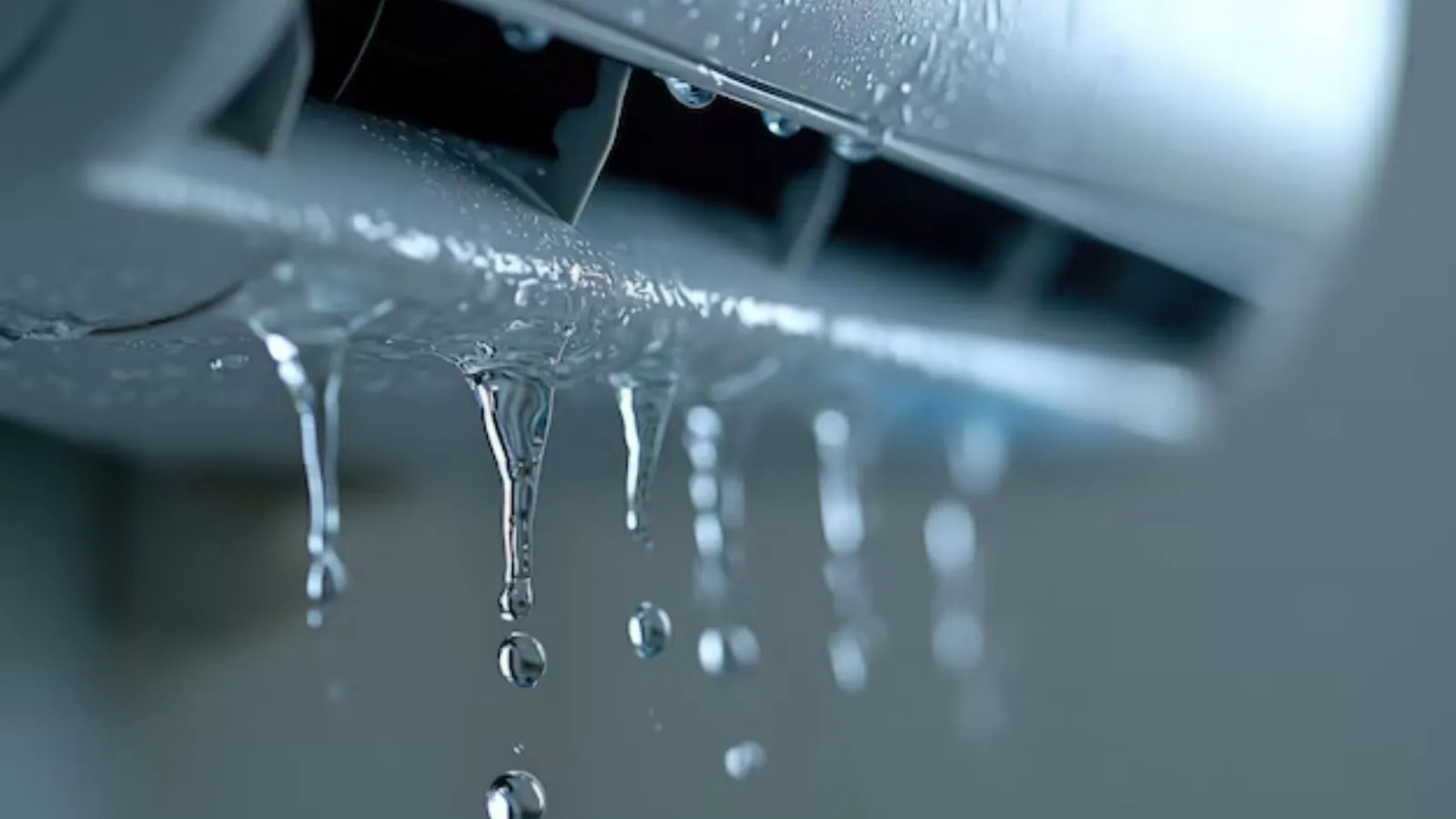
AC leak water damage repair deals with water that an air conditioning system makes itself. Cooling pulls moisture out of indoor air, and that condensate is meant to run down a drain line to the outside or to a pump. When the line clogs or the pan rusts through, the water goes into the building instead.
In Nanuet homes it usually shows as a ceiling stain under an attic air handler or a wet floor in the closet beside the unit. Turn the system off at the thermostat first. That stops new water while you arrange the cleanup.
How an AC system leaks into a house
There are four common paths. The condensate drain line blocks with algae and dust and the pan overflows. The safety float switch is missing or stuck, so nothing shuts the unit down. The primary pan cracks with age. Or ductwork in a hot attic sweats and drips onto the ceiling below. A wall-mounted mini split can also drip down the wall when its drain backs up.
Callers describe it in plain terms: the condensation line backed up, water came through the hallway ceiling, or the closet next to the air handler smells damp and the carpet is wet. One call was about hardwood boards cupping because a condensate line had been leaking under them for weeks.
Why these leaks do more damage than their size suggests
An AC leak is slow. It can drip for a whole cooling season before a stain appears, because attic insulation soaks up the first gallons. By the time the ceiling shows a ring, the insulation above it is saturated and the top of the drywall has been wet for a long time. Slow, repeated wetting is also the pattern that leads to mold growth, since mold needs moisture and time.
We repair the water damage. An HVAC contractor clears the drain, replaces the pan or fixes the unit, and that has to happen or the stain will return.
Signs to check before you call
What to look at around the unit
- A brown or yellow ring on the ceiling below the air handler or along a duct run
- Water in the secondary drain pan, or rust in it
- Damp carpet, swollen baseboard or a musty smell in the closet housing the unit
- Dripping from a supply vent when the system runs
- Paint bubbling on a wall under a mini split head
How we assess and dry it
- 1
Find the full wet area
A moisture meter and thermal camera show how far water spread through insulation and along framing.
- 2
Scope and price explained
You hear what needs to come out, what can be dried and how it is priced before work starts.
- 3
Remove wet insulation
Saturated attic or wall insulation is bagged and removed so the drywall and joists can dry.
- 4
Dry
Air movers and a dehumidifier run until readings match dry reference areas of the house.
- 5
Repair
Stained or sagging drywall is replaced, sealed and painted. Flooring and baseboards are repaired where affected.
Stain under the air handler? Call and tell us where the unit is and how long the mark has been there.
Call (833) 521-1033Repair options and honest trade-offs
| Situation | Option | Trade-off |
|---|---|---|
| Light stain, drywall firm, caught early | Dry, seal with stain blocker, repaint | Lower cost, but only if the meter confirms it is dry |
| Insulation soaked, drywall soft | Remove insulation and the ceiling section | More work now, no hidden damp left behind |
| Closet floor and wall base wet | Lift carpet, remove pad, dry subfloor | Pad is replaced, carpet is usually kept |
| Long-term leak with visible growth | Stop and assess separately | Mold work follows its own S520 standard and may need a specialist |
What drives the cost
Scope and drying on this service follow the ANSI/IICRC S500 standard for water damage restoration.
Insurers often treat a sudden overflow as accidental damage and a long-running drip as a maintenance issue, so the answer varies. Check your policy or ask your insurer. We supply dated photos, moisture readings and an itemised scope.
When the water reached wood flooring, see hardwood floor water damage repair. For wet wall bases, see wall and drywall repair. We work across Nanuet and in West Nyack, Pearl River, Blauvelt, Nyack and Valley Cottage.
Safety guidance: do not touch wet outlets, switches or cords. Switch off the affected circuit only from a dry panel, and call the utility if you are unsure.
AC leak water damage questions
Do you fix the air conditioner?
No. An HVAC technician clears the drain line and repairs the unit. We dry and repair the ceiling, walls and floors the water damaged, and we can work alongside your HVAC contractor.
Is water from an AC unit clean?
Condensate starts fairly clean but sits in pans and lines with dust and growth, so it is treated with some caution. It is not sewage, and most affected materials can be dried if the leak is caught early.
The stain is small. Can it wait until autumn?
Waiting is the costly choice. Each cooling cycle adds water to the same spot, and wet insulation does not dry on its own in a closed attic. A quick meter check tells you how much is wet.
Can you look at it and tell me if it is still wet?
Yes. An assessment with a moisture meter takes a few minutes per area. If it is dry, we will say so.