
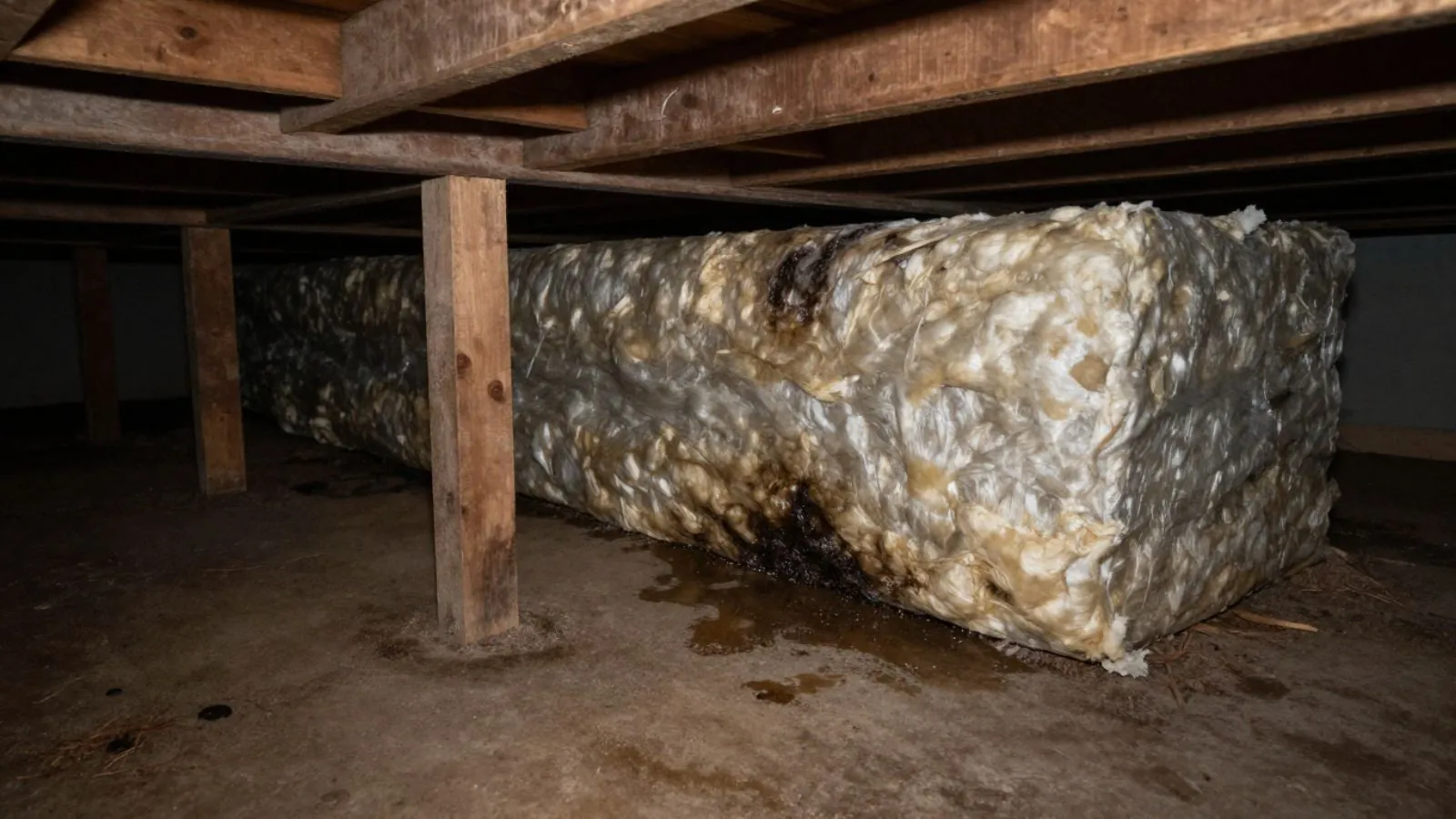
Crawl space water damage is water in the shallow void between the ground and the first floor: standing on the soil or liner, soaked into insulation, and rising as vapour into joists and subfloor. Nobody looks under there often, so it is usually found by its effects. Floors feel soft or cold, a musty smell comes up through the registers, or someone opens the hatch after a storm and sees water.
Not every Nanuet house has a crawl space. Many have full basements, and some have a crawl space only under an addition or a porch conversion. We do not have housing data that says how common they are here, so this page is written for the homes that have one.
How water gets under the floor
Four sources account for most of it. A supply or drain line running through the space leaks. Surface water enters through vents or the access door during heavy rain. Groundwater rises after a wet spell. Or outdoor plumbing fails: one caller's crawl space flooded from an irrigation backflow device that let go.
The source matters because it sets the water category. A clean supply leak caught early is simple. Ground and surface water carry soil and are handled as contaminated. A drain line leak is treated like sewage, and the steps on our sewage backup page apply.
What water does to the under-floor structure
Fiberglass batts between joists hold water and sag. Once soaked they do not recover, and they hold moisture against the wood. Joists and subfloor absorb vapour, and wood that stays above a safe moisture content for long can decay and support mold growth. Ducts in the space can pull that damp air into the house. Above, hardwood floors may cup, which is the subject of our hardwood floor page.
Before anyone goes in
Safety checks at the hatch
- Is there wiring, a junction box, a furnace or a pump in or near the water? If so, stay out and switch power off from a dry panel.
- Is there a sewage smell? Treat the water as contaminated.
- Is the space tall enough to move in, and is the access clear?
- Can you photograph the water level from the opening without entering?
How we clean and dry a crawl space
- 1
Inspect and measure
We check water depth, the source, wood moisture content of joists and subfloor, and the state of insulation and any liner.
- 2
Scope and price explained
You hear what has to come out and how the work is priced before starting.
- 3
Pump and extract
Standing water is pumped out. Mud and debris are removed where needed.
- 4
Strip wet insulation
Saturated batts and damaged vapour barrier are bagged and taken out.
- 5
Dry the wood
Air movers and dehumidifiers sized for the space run until joist and subfloor readings are back in a normal range.
We dry and clean. Permanent fixes such as regrading, drainage, encapsulation or a sump system are separate trades, and we will tell you plainly when the cause points to one of them. Restoration is not waterproofing.
Opened the hatch and found water? Call and tell us how deep it is and what runs through the space.
Call (833) 521-1033Dry and keep, or remove?
| Material | Usually | Notes |
|---|---|---|
| Floor joists and beams | Dried in place | Replaced only if decay has set in |
| Plywood or plank subfloor | Dried in place | Delaminated plywood is replaced |
| Fiberglass insulation | Removed | It does not dry well in place |
| Vapour barrier or liner | Cleaned or replaced | Depends on tears and contamination |
| Ductwork | Inspected | Wet duct insulation is replaced |
Cost factors
Scope and drying on this service follow the ANSI/IICRC S500 standard for water damage restoration.
Coverage depends on the cause. A sudden pipe break is often covered, while groundwater and surface water usually fall under flood exclusions. Check your policy or ask your insurer. We provide photos, wood moisture readings and an itemised scope.
We work in Nanuet and nearby Valley Cottage, West Nyack, Pearl River, Blauvelt and Nyack. If the water is in a full-height basement instead, read the basement water damage page.
Safety guidance: do not touch wet outlets, switches or cords. Switch off the affected circuit only from a dry panel, and call the utility if you are unsure.
Crawl space water damage questions
Is water in a crawl space urgent?
It is less sudden than a burst pipe but should not wait weeks. If water is rising, touching wiring or coming from a broken pipe, call straight away. The line is answered 24/7.
Will the crawl space dry out on its own?
Rarely. There is little air movement under a house, and wet insulation keeps the wood damp. Mechanical drying after the water is removed is the dependable way.
Do you install sump pumps or encapsulation?
No. Those are waterproofing and drainage trades. We remove the water, strip wet materials and dry the structure, and we will point out where a permanent fix is needed.
My floors feel soft. Is that from the crawl space?
It can be. Soft or bouncy floors, cupped boards and a musty smell all point below. An inspection with a moisture meter on the subfloor and joists answers it.