
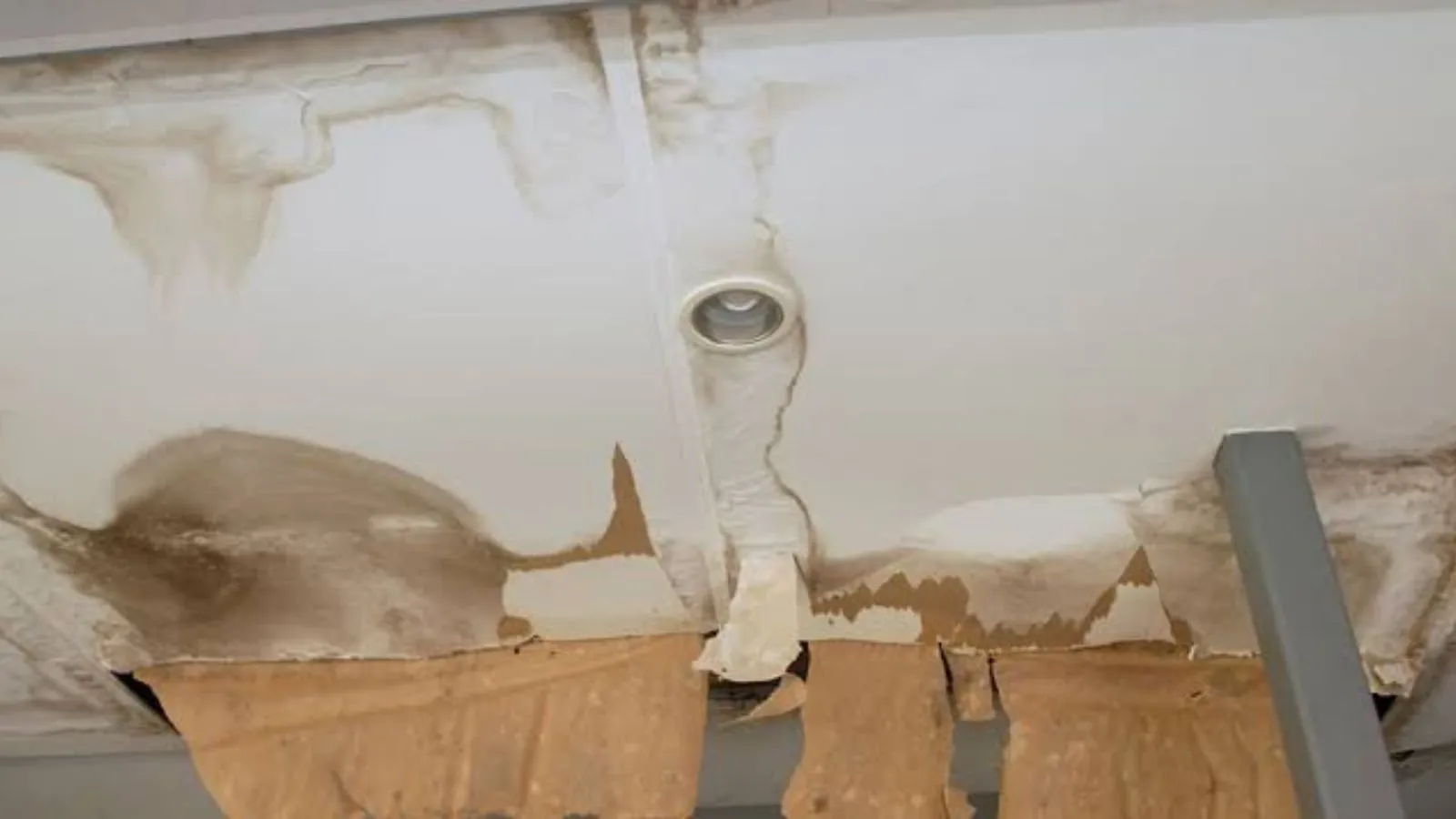
The question behind the question
People ask whether a stain is old or new for three reasons. They have just moved in and want to know what they bought. They are renting and want to know whose problem it is. Or they have noticed a mark and cannot remember whether it was always there.
In each case the useful question is slightly different: is water still getting in? A fifteen-year-old stain from a leak that was fixed is a paint job. A two-week-old stain from a leak nobody has found is a project.
Six clues you can check yourself
| Clue | Suggests new or active | Suggests old |
|---|---|---|
| Touch | Damp, cool or soft | Dry and as hard as the surface around it |
| Rings | One mark, no rings | Several rings, like tree rings, from repeated wetting and drying |
| Edge | Soft, blurry outline | Sharp, dark outline |
| Colour | Darker and wet-looking, uneven | Yellow or brown, even, faded |
| Surface | Bubbling paint, sagging | Flaking, cracked or powdery, but stable |
| Smell | Damp, musty when close | None |
No single clue is conclusive. Three or four pointing the same way usually are.
What rings mean
Rings are the most informative sign. Each time a surface gets wet and dries, dissolved material is carried outward and left at the edge of the wet patch. One wetting leaves one outline. A stain with several concentric rings has been wet several times.
That tells you something important. The leak is not a one-off. It comes and goes, perhaps with rain, with use of a shower above, or with the cooling season. An intermittent leak may be dry on the day you look and still be active.
Material changes the reading
- 1
Drywall and paint
Shows stains quickly. Softness means it is wet now or was badly soaked. Flat paint stains easily. Gloss paint can hide moisture until it bubbles.
- 2
Plaster
Stains more slowly and stays hard when damp. A powdery or crumbling surface points to repeated or long wetting.
- 3
Ceiling tiles
Stain fast and sag when wet. A stained but flat tile has probably dried.
- 4
Wood
Darkens when wet. Grey or black staining and raised grain point to long exposure. Soft wood means decay.
- 5
Tile and masonry
White crusty deposits come from water moving through over time.
- 6
Wallpaper
Lifts at seams when damp and stains from behind.
Thick or dense materials hold water without showing it, so old houses with plaster can have damp behind a surface that looks sound.
Simple tests
- Mark it. Draw lightly around the stain in pencil and write the date. Check after rain and after a week. Growth means active.
- Tape test. Tape a square of clear plastic over the area, sealed on all sides. Moisture collecting under it within a day or two means the material is damp.
- Use it. If the stain is below a bathroom, run the shower, fill and drain the bath, flush several times. Then look.
- Check the weather. Look at the stain during or just after heavy rain.
- Look above and behind. Attic, the room upstairs, the other side of the wall.
A moisture meter makes all of this quicker. It reads the moisture in the material directly, and comparing the stained area with a clean area nearby gives the answer in seconds.
Mold as a clue, with a caution
Visible growth on or around a stain means the material has been damp for a sustained period, since mold needs moisture and time. It does not date the leak precisely, and its absence does not mean a stain is new. We do not diagnose mold or advise on health. Testing and remediation follow the S520 standard, and health questions belong to a physician.
Where stains usually come from
- Ceiling below a bathroom: supply line, drain, shower pan, toilet seal or failed caulk.
- Ceiling on the top floor: roof, flashing, attic air handler or condensation.
- Top of a wall: roof edge or gutter overflow.
- Bottom of a wall: plumbing in the wall, or water wicking from the floor.
- Around a window: flashing or sill.
- Basement wall: ground moisture or grading.
Overhead stains are covered on our ceiling water damage repair page.
Reading stains in Nanuet homes
In Nanuet, the age of the housing means old stains are common and not always alarming. The hamlet grew quickly after the New York State Thruway and the Palisades Interstate Parkway opened in the mid-1950s, so a great many homes have had six or seven decades in which to spring a leak at least once.
The 2020 census counted 6,976 housing units here, with 4.6 percent vacant. A vacant unit is where a leak runs longest before anyone sees it, so if you are moving into a home that stood empty, check every ceiling and the base of every wall.
Basement stains deserve a separate look. A New York State DEC study lists four high-risk flood areas in Nanuet on the Nauraushaun Brook system. A straight horizontal line on a basement wall is the mark of standing water, not of a pipe leak, so ask the seller or landlord about it and check the FEMA flood map for the address.
For renters
If you find a stain when you move in, photograph it with the date and send it to the landlord in writing. That protects you if it grows. If a stain appears or changes during your tenancy, report it promptly and keep a copy. Finding and fixing the source is normally the owner's job. Ask a tenant advice service about your rights, since we cannot advise on them.
When to stop watching and call
Call when the stain is growing, when the surface is soft or sagging, when you can hear dripping, when it changes with rain or water use, or when there is a musty smell. A soft or bulging ceiling is a safety issue, so keep clear of it.
An assessment finds whether it is wet, how far the moisture extends and usually where it is coming from. If walls are involved, see wall and drywall water damage repair.
If it turns out to be old
Good. Confirm it is dry with a meter, seal it with a stain-blocking primer and repaint. Ordinary paint alone will let the stain bleed back through. Keep the dated photo in case it ever reappears.
We check stains for homeowners and tenants in Nanuet and nearby Blauvelt and Pearl River.
Stain you cannot date? A moisture reading settles whether it is active in seconds.
Call (833) 521-1033Old or new damage questions
I found a horizontal line on the basement wall of a Nanuet house. Is that old water damage?
A level line usually marks where standing water once sat. It may be old, but it tells you the basement has held water. Ask when it happened and what was done, check the FEMA flood map for the address and have the wall base metered.
Do several rings in a stain mean several leaks?
They mean the same spot got wet more than once. That usually points to one intermittent source, such as rain or a fixture used now and then.
Can a stain be dry and the leak still active?
Yes. Intermittent leaks dry out between events. Mark the outline, date it and check again after rain or heavy water use.
Is it fine to paint over an old stain?
Only once a meter confirms it is dry and the source is fixed. Use a stain-blocking primer first.