
The short answer
With professional equipment running continuously, most homes with a clean-water loss are dry in about three to five days. Some jobs finish in two. Dense materials, deep saturation or contaminated water can stretch it to a week or more.
Without equipment, the honest answer is that nobody knows. Materials may feel dry in a week and still hold damp inside for a month. That gap between feeling dry and being dry is where later problems come from.
Why "dry" needs a number
Building materials always contain some moisture. Dry does not mean zero. It means back to the normal level for that material in that house. Professionals find that level by measuring an unaffected area of the same material, and they call it the dry standard. The wet area is dry when its reading matches.
This is why two companies can disagree about whether a wall is dry, and why you should ask to see readings instead of taking anyone's word for it.
Typical drying times by material
| Material | Typical time with equipment | What slows it |
|---|---|---|
| Carpet, after extraction | 1 to 3 days | Wet pad left in place |
| Carpet pad | Often replaced | Thick or rubber-backed pad |
| Drywall, single layer | 3 to 5 days | Paint that seals, insulation behind |
| Plaster on lath | 5 to 10 days | Thickness and density |
| Wood studs and plates | 3 to 5 days | Closed cavities |
| Plywood or OSB subfloor | 3 to 7 days | Vinyl or tile on top |
| Hardwood flooring | 7 to 14 days or more | Finish coats and tight joints |
| Concrete slab | Weeks to reach a flooring-ready level | Thickness and ground moisture |
These are general ranges drawn from ordinary restoration practice under the ANSI/IICRC S500 standard, not promises for a particular job. Wood floors have their own page: hardwood floor water damage repair.
Six things that change the timeline
- 1
How long it was wet
Water that sat for days has soaked deeper than water extracted within hours.
- 2
How much water was removed first
Thorough extraction can halve the drying time. Evaporating water is far slower than pumping it.
- 3
The materials
Dense and layered materials dry slowly.
- 4
Air movement
Evaporation needs moving air across the wet surface.
- 5
Dehumidification
Moving air only helps if something removes the moisture from it.
- 6
Temperature and outdoor humidity
Warm, dry air dries faster than cold or humid air.
What the equipment does
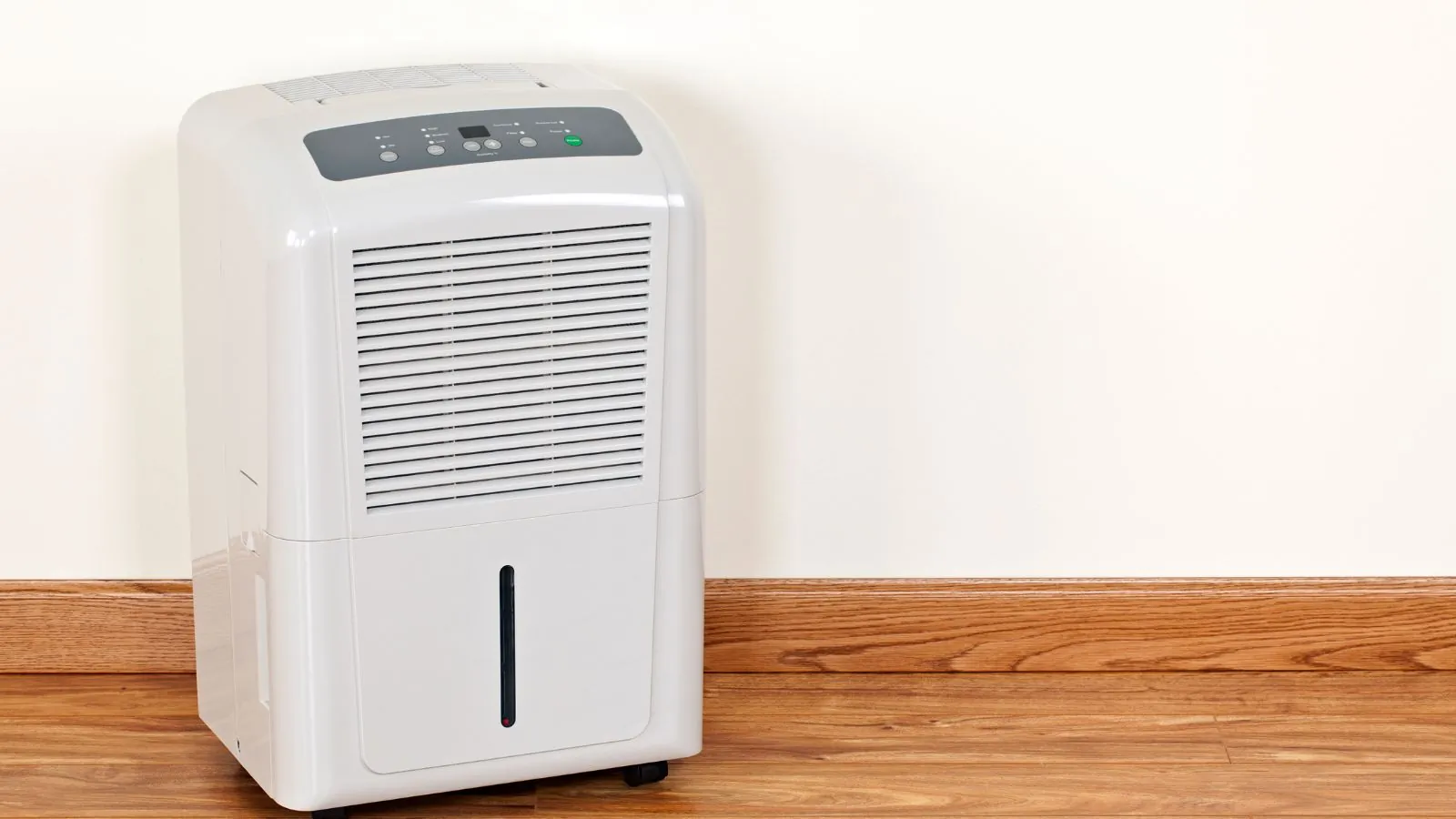
Air movers push a fast, flat stream of air across wet surfaces, which lifts moisture off them. Dehumidifiers pull that moisture out of the air and send it down a drain. Each is of little use without the other. Fans alone raise the humidity until evaporation stalls. A dehumidifier alone waits for moisture that still air is slow to deliver.
Equipment has to run day and night. Switching it off overnight because of the noise is the most common reason a three-day job becomes a six-day one.
Signs it is not dry yet
- Baseboards that keep swelling or pulling away.
- Paint that bubbles days after the leak.
- A musty smell that returns when doors are closed.
- Flooring that continues to cup or lift.
- A patch of wall or floor that feels cooler than the rest.
- Condensation on windows in the affected room.
Can you speed it up yourself?
A little. Remove wet rugs, cushions and cardboard from the room, since they add moisture to the air. Keep interior doors open so air circulates, but keep outside windows shut while a dehumidifier is running. Keep the room warm. Take baseboards off if you are comfortable doing so, because the wall dries from its bottom edge.
Do not use high heat. It can crack wood and plaster and drives moisture deeper into cooler materials.
Drying conditions in Nanuet homes
Two local factors affect drying time here. The first is the building. Nanuet's housing spans many decades, with much of it built after the New York State Thruway and the Palisades Interstate Parkway opened in the mid-1950s. Homes of different ages have different wall and floor assemblies, and plaster, drywall and hardwood each sit at a different point in the table above. Ask what your walls are made of before accepting a drying estimate.
The second is the water. A state DEC study lists four high-risk flood areas in Nanuet on the Nauraushaun Brook system. Flood water is treated as contaminated, so soaked porous materials are removed before drying starts. That adds a day or two at the beginning but leaves less to dry.
We have no published local humidity figures to quote. For seasonal climate data, the National Weather Service is the source to use.
Why rebuilding has to wait
New drywall, flooring and cabinets must go onto dry structure. Close a wall over damp studs and the moisture is trapped behind fresh paint. Lay flooring on a damp subfloor or slab and it may cup, lift or fail at the glue line. The drying log, a record of readings over the days, is what tells a contractor it is safe to start. The process is described on our structural drying page.
What to ask the crew
Ask what the dry standard is for your house and where it was measured. Ask to see the daily readings. Ask what the plan is if a material is not responding, which usually means opening it up or adding equipment. And ask what happens on the last day: equipment should come out only when the readings say so.
We dry homes in Nanuet and nearby Nyack and Valley Cottage.
Still damp after a week? Readings show where the moisture is and why it has not gone.
Call (833) 521-1033Drying time questions
Does an older Nanuet house take longer to dry than a new one?
It can. Plaster walls and solid wood floors are denser than drywall and engineered products, so they release moisture more slowly. They also often survive a wetting that newer materials would not. The readings decide, not the age.
How long does it take for water damage to dry on its own?
There is no reliable figure. Surfaces may feel dry within a week while framing and subfloor stay damp for much longer.
How long do the drying machines stay?
Usually three to five days for a clean-water loss, longer for hardwood, plaster or concrete. They are removed when readings reach the dry standard.
Can I sleep in the house while it is drying?
Usually, for clean-water losses, though the equipment is noisy and warm. After sewage or major flooding, ask the crew which rooms to avoid.