
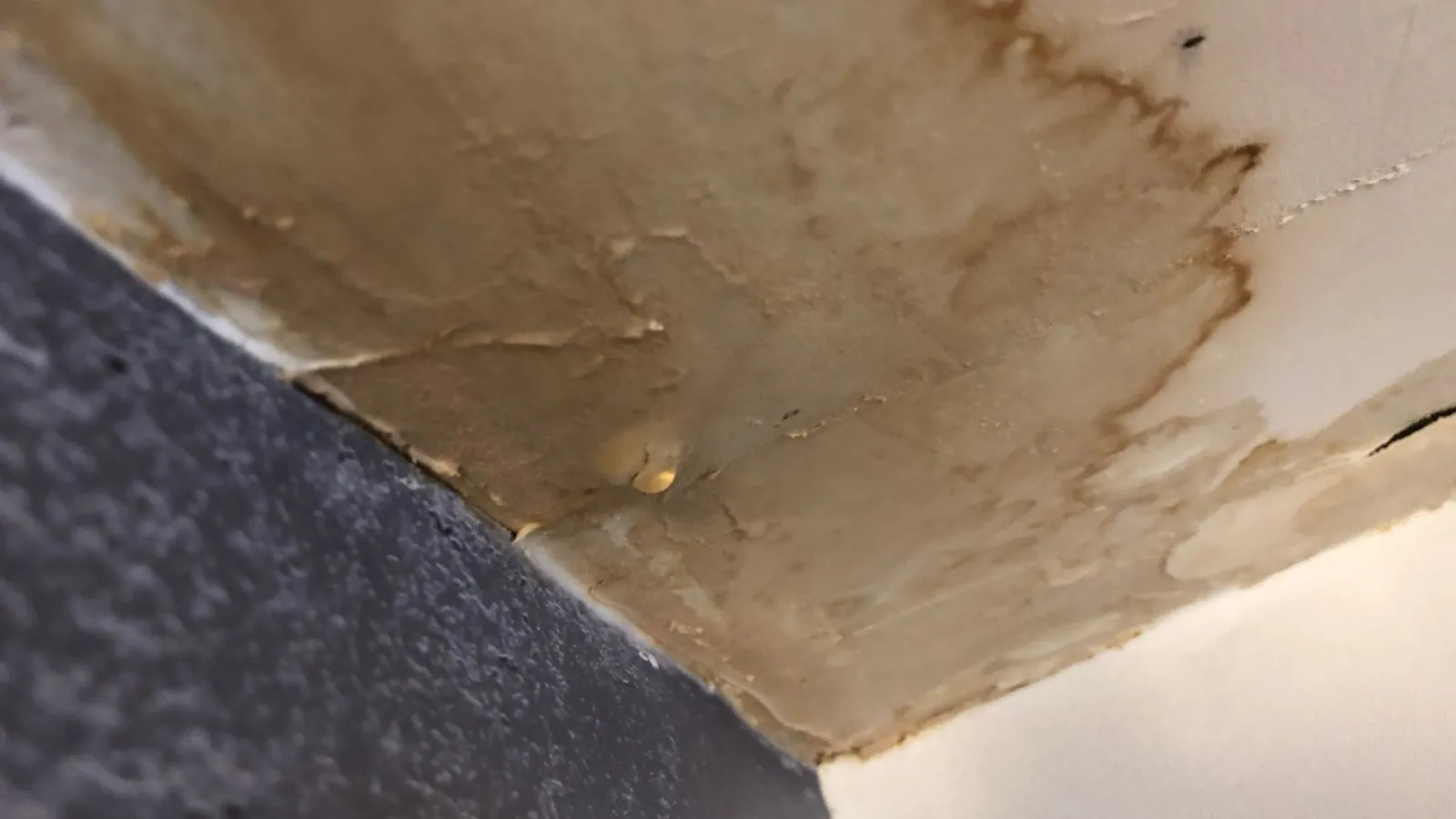
The one question every insurer asks
When a water claim reaches an adjuster, the first question is not how much water there was. It is how the water got there and how fast. Most homeowners policies are written around that distinction, and once you understand it, most coverage answers make sense.
We are a restoration service, not an insurance company or a law firm. What follows is the general pattern. Your own policy is the only document that decides your claim, so check it or ask your insurer or agent.
Four kinds of water, four usual answers
| How the water arrived | Typical example | Usual treatment under a standard homeowners policy |
|---|---|---|
| Sudden and accidental, from inside | Burst supply line, split washer hose, failed water heater tank | Often covered |
| Gradual, from inside | Slow drip under a sink for months, long-term seepage, worn seals | Often not covered |
| From outside, rising | Brook or surface water entering at ground level, groundwater | Usually excluded, needs separate flood coverage |
| Backing up | Sewer or drain backup, sump overflow | Often excluded unless an endorsement was added |
"Often" and "usually" are doing real work in that table. Policies differ by company and by the options chosen when the policy was bought.
Sudden and accidental: the covered core
The classic covered loss is a pipe that bursts while you are out. The policy typically responds to the damage the water caused: wet drywall, ruined flooring, soaked belongings and the cost of drying the structure. It often does not pay to repair the failed part itself. A new water heater or a plumber's bill for the pipe is commonly your own expense.
If that is your situation, the cleanup side is described on our burst pipe water damage page.
Gradual damage: where claims run into trouble
Insurers generally expect a homeowner to maintain the house. A leak that went on for months, visible rot, or repeated staining in one place can be read as a maintenance problem and declined. The grey area is hidden leaks. Some policies cover damage from a leak nobody could reasonably have seen, and some limit it. Read the wording on seepage and continuous leakage, or ask your agent to point to it.
The practical lesson is to act on small signs. A stain that is dealt with in week one is a simpler conversation than the same stain in month six.
Flood: a separate policy
Flood damage, meaning water that rises from outside and enters at ground level, is excluded by almost every standard homeowners policy. It is covered, if at all, by a separate flood policy. Those policies have their own terms, and many have a waiting period before they take effect, so they cannot be bought the day a storm is forecast. Ask an agent for the current rules.
Backup of sewers and drains
Water that comes up through a floor drain or a toilet is treated as its own cause. Many policies exclude it unless you added a backup endorsement, which is added to the policy separately. If your home has a finished basement with a floor drain, ask your agent whether you have it.
What this means in Nanuet
Nanuet has a mapped flood record, which makes the flood exclusion more than a technicality here. Nauraushaun Brook runs through the hamlet, and a New York State DEC Resilient NY study of the Hackensack River watershed lists four high-risk flood areas in Nanuet.
The same study explains the federal term Special Flood Hazard Area as the land flooded in a 100-year event, and notes that a property in one has about a 26 percent chance of such a flood over a 30-year mortgage. FEMA's effective flood maps for Rockland County date from 2014.
You can look up your own address at the FEMA Flood Map Service Center. A home outside a mapped area can still flood, and flood coverage is available outside mapped areas too. For any rule specific to New York policies, ask your insurer or the state insurance regulator instead of relying on a general guide.
What helps a claim, whatever the cause
- Report the loss promptly. Policies require prompt notice.
- Stop the damage from getting worse. Policies generally expect reasonable steps, such as shutting off water and starting to dry.
- Photograph everything before cleanup, when it is safe.
- Keep the failed part if a plumber removes it.
- Keep receipts for emergency costs.
- Get moisture readings and an itemised scope from the restoration crew.
We provide the readings, photos and scope on every job. We do not negotiate with insurers and we cannot predict a decision.
Renters and condo owners
A renter's policy covers the renter's belongings, not the building. In a condominium or co-op, the association's master policy and the unit owner's policy divide the building between them, and the governing documents say where the line is. If a neighbour's leak damaged your unit, each insurer may be involved. Report to your own first.
Where restoration fits
Restoration and the claim run side by side. Drying should not wait for an adjuster's visit, because delay makes the damage worse and insurers expect you to limit it. Good documentation at the start protects you. For homes with below-grade rooms, our basement water damage page explains what is done and why. We serve Nanuet and nearby West Nyack and Pearl River.
Loss already happened? Stop the damage first. Documentation for the insurer starts with the assessment.
Call (833) 521-1033Insurance coverage questions
Is flood coverage worth asking about in Nanuet if I am not right beside Nauraushaun Brook?
It is worth asking. The state study identifies four high-risk areas in Nanuet, but flooding is not limited to mapped zones. Look up your address on the FEMA flood map, then ask an agent what flood coverage would cost for your property so you can decide with real numbers.
Does insurance pay for the restoration company?
When the loss is covered, the cost of reasonable mitigation and drying is normally part of the claim. Whether your loss is covered is your insurer's decision.
Will a water claim be denied if the pipe was old?
Age alone does not usually decide it. Insurers look at whether the failure was sudden and whether there were signs of long-term leakage. Ask your insurer how your policy treats wear and tear.
Should I wait for the adjuster before cleaning up?
No. Photograph the damage, then stop the source and start drying. Waiting lets damage spread, and policies expect you to prevent that.